

Reading: Space Captain Smith by Toby Frost.
With not a hair out of order in his magnificent mustache, the fearless Captain Smith will fight notoriously rum ant-men, stop the tea blockade and perhaps even learn how to talk to women, all in service of the British Empire IN SPACE!!! This is not steam punk as much as brittification of the traditional spaceship-and-laser-gun science fiction genre. In a way it reads like Jasper Fforde, but without quite his genius (or whatever it is) for keeping the story compelling within the bounds of random madness. The basis for the Captain Smith series is the similarities between classical science fiction and classical British Navy drama, and Frost is at his best when he just explores the setting without adding additional jokes. Thomas the Differential Engine and World of Warcraft-riffs feel oddly out of place and slows down a story that is way too thin to allow the reader to put the book away, but Space Captain Smith doing a drop-pod attack against Lemming Men feels just right.
Mostly the pacing is really good. The story moves fast, the characters are introduced without any fuss and the obligatory plot twists are dealt with in a stride, which sometimes feels like a relief since the books Frost parodies are notorious for being door stoppers with abysmal pacing (I am looking at you, Peter Hamilton). The first three Captain Smith books are fast, fun, silly and an enjoyable ride through a science fiction roller coaster you don't have to take serious at all.
Just sit back, enjoy the story and think of the queen. Jolly Good. The tea must brew.
Saturday, November 5, 2011
Reading: Space Captain Smith


Reading: The Birthday of the World

Reading: The Birthday of the World.
Ursula Le Guin is a genius who's work is an essential part of the science fiction genre, and she is at her best in short novels. Without the need for a lengthy plot she can focus on what she does best - presenting novel worlds and societies through the eyes of very real and human - however alien - characters.
She may tell us about the hermaphrodite hitting puberty, the fifth generation on a generation-ship or the alien anthropologists' daughter. In the end she holds up a mirror, and what we see is ourselves in all our strangeness and glory.
Wednesday, July 13, 2011
The privilege delusion
Richard Dawkins faller platt i min aktning. Från brilliant populärvetenskapare till sexistisk misogynist med ett blogg-svar. Helt uppenbart måste feminismen vinna sina segrar om och om i varje enskilt fält, även bland de som påstår sig vara rationella och intelligenta.
Skepchick - The privilege delusion
Thursday, June 2, 2011
Sjukdom är inte defekt

Foto: Wikimedia Commons
I DN 1 Juni rapporteras via TT och Jyllandsposten om inseminering med "defekt" sperma under rubriken "Defekt sperma kan ge svåra nervskador". Det är en dansk spermabank som förmedlat donerad sperma från en man som - sig själv ovetande - bär på sjukdomen neurofibromatos typ 1. Ordet defekt återkommer både i artikeln och rubriken och får mig att resa ragg.
Vi är alla resultatet av ett genetiskt lotteri. 23000 gener från vardera föräldern skall blandas och balanseras. Oräkneliga processer skall fungera smärtfritt och optimalt, både för den miljö vi lever i nu och den miljö vi evolverade i. Ofrånkomligen uppkommer problem. De mest tydliga och upprepbara problemen väljer vi att kalla sjukdomar. Enligt professor Magnus Nordenskjöld på Karolinska Institutet finns det nära 8000 genetiska sjukdomar. Ungefär 3000 personer i Sverige har neurofibromatos typ 1 enligt Sahlgrenska sjukhusets informationsskrift (pdf-dokument).
Människorna som lever med de sjukdomarna är inte "defekta". De är sjuka. Även den terminologin kan man ifrågasätta men det är en annan diskussion. När man som blivande förälder väljer att få barn gör man det med insikten att man inte kan kontrollera sina barns egenskaper. Man kan välja att avstå från att skaffa barn om man är orolig för sina egna och sin partners anlag. Man kontrollera fostret för en handfull genetiska sjukdomar - vanligen bara om anlagen finns i släkten - men sen kan man bara kasta tärningarna och vinna ett genom som Jonathan Coluton sjunger.
I fallet med inseminering så tar givetvis spermabanken ett ansvar för produkten de säljer. Nordic Cryobank har med frasen "with highly screened donor sperm" redan i tag-linen på sin hemsida, så uppenbarligen ser de sjukdomsfria anlag som en prioritet. Däremot finns neurofibromatis inte med på listan av anlag de testar sperman och spermadonatorn för (till skillnad från personlighet och utbildning, vad de nu menar med det) och med tanke på att sjukdomen i hälften av fallen uppkommer spontant snarare än överförs gentiskt så är risken uppenbar att den fyra-generationers sjukdomshistoria de begär från donatorerna inte fångar upp just det här anlaget. Sjukdomen kan dessutom ofta gå oupptäckt, så en läkarundersökning av donatorn är inte heller en garant.
Borde spermabanken ha kontrollerat sina donatorer för neurofibromatos typ 1? Kanske. Det beror på hur allvarligt de ser på "highly screened". Men de har som sagt nästan 8000 sjukdomar till att ta ställning till om vi förväntar oss helt problemfri sperma. Gör spermabanken rätt som stoppar fortsatt inseminering med just den här sperman* och gör den enskilda kvinnan rätt i avstå från den? Absolut. Att få barn är ingen rättighet, vare sig man donerar eller inte, och spermabanken och kvinnorna som väljer att insemineras har all rätt att välja eller välja bort en enskild donator.
*) Det står faktiskt inte uttryckligen att de återkallat sperman, men jag förutsätter det från tonen hos deras talesman.
Gör TT och DN rätt som kallar sperman för defekt? Absolut inte. Defekt sperma skulle ha varit om den förvarats felaktigt och förlorat sin befruktningspotential (med tanke på hur dyr en enskild behandling på en ferilitetsklink är så vore det i sig läge för upprördhet, men det var nu inte vad som hände). Den aktuella sperman är inte defekt, inte mer än de 3000 människorna i Sverige som har sjukdomen är defekta. Det är fullt normal, fullt fungerande sperma från en individ som - liksom alla vi andra - är slutresultatet av 200'000* års mänsklig evolution. Den har en oönskad egenskap. Det är möjligen grund för att anklaga spermabanken för felaktig produktbeskrivning, men det betyder inte att sperman eller de minst nio barn som fötts i Danmark (okänt om någon fötts i Sverige) med donatorn som far är "defekta". En kvinna som väljer att inseminera sig kastar tärningarna precis som alla andra föräldrar. Skillnaden är bara att hon överlåtit åt klinken att bedöma lämpligheten hos donatorns anlag. Och återigen - hur noggrann undersökning vi än gör så kan vi bara kontrollera en bråkdel av det blivande barnets egenskaper. Som tur är.
*) Det var så länge sedan den sista gemensamma urmodern levde, enligt analys av mitokondrie-DNA.
Så vad är det för sjukdom vi pratar om i vilket fall? Enligt Sahlgrensa sjukhusets informationsskrift så har de flesta som fått neurofibromatos typ 1 "lindriga besvär och upplever inte att de fått en sjukdom" och vi får veta att sjukdomen "sällan leder till svåra funktionshinder." Visserligen kan inte sjukdomen förhindras, men "däremot kan de flesta komplikationer behandlas, botas eller lindras på olika sätt". För de som bär på anlagen är sjukdomen en kronisk faktor i deras liv, men de är knappast defekta.
Varför gör det här mig så upprörd att jag skriver ett blogginlägg som är tre gånger så långt som ursprungsnotisen? Det finns två skäl. För det första upprörs jag som förälder och som biolog över en hejdlöst naiv syn på vad vi kan veta och kontrollera om våra barns gener. Att få barn är ett språng in i det okända. Att födas ett ännu större. En övertro på genetiska tester gagnar inte någon, allra minst de nyblivna föräldrar som tvingas hantera känslan av att deras fullt normala baby är "defekt".
För det andra så andas hela formuleringen eugenetik. Jag vet att man inte skall skrika Godwins lag så snart gentester kommer på dagordningen, men problembeskrivningen och lösningen är inte ny på något sätt. Att begränsa förökning till rätt föräldrar är ett genomgående tema i 1900-talets minst önskvärda ideologier.
Vi lever i en tid när möjligheten att läsa sitt barns gener - om än fortsatt små - trots allt ökar, och från samhällets sida behöver vi en beredskap för hur vi skall hantera den informationen. Barn föds med variationer. Det finns ingen gyllne "normal" eller "rätt" samling egenskaper där de som avviker är "defekta". Vissa egenskaper är oönskade av föräldrar eller samhälle - till exempel ämnesomsättning, neurofunktion, utseende eller kön - och vissa av dem kallar vi för sjukdomar. Många sjukdomar kan behandlas, och ofta tjänar man på att identifiera dem så tidigt som möjligt (till exempel Fenylketonuri som man letar efter med PKU-testet). Andra egenskaper kan upptäckas vid provrörsbefruktning eller fosterdiagnostik vilket kan ge föräldrarna tillfälle att förbereda sig och dessutom valet att välja bort oönskade spermier ta bort fostret. Föräldrar och samhälle står inför viktiga etiska avgöranden, och det är inte till minsta nytta om minsta avvikelse från normen stämplas som defekt. Valen är svåra nog i alla fall.
Vi ska inte ha en övertro på genetiska tester eller fertilitetsklinikers bedömning av spermadonatorer, vi skall vara medveten om variationen som finns bland människor och vi skall inte kalla sjukdomar för defekter.
Ps.
Det var intressant att se att i onlineversionen av notisen så hade rubriken ändrats från "defekt" till "sällsynt sjuktdom". Dessutom har det lagts till perspektiv från representanter för både kryobanken och svenska forskare och myndigheter som alla betonar hur svårt det skulle vara att garantera "frisk" sperma. Var det av platsbrist de kommentarerna inte kom med i papperstidningen eller insåg man först efter publicering hur stötande formuleringen var?
Ds.
Pps. På bloggen Fanborgen förs genusperspektivet från notisen fram. "En man har sett till att kvinnor föder sjuka barn." Bloggaren noterar att valet att insemineras låg hos kvinnorna, men notisen lyfte fram mannen som aktören. Dds.
Tuesday, May 17, 2011
Klimatkompensation
Jag har köpt utsläppsrätter för min senaste flygresa, mellan Arlanda och Helsingfors. Jag köpte rätt till ett ton koldioxid via Naturskyddsföreningen, vilket räcker till tre till fyra gånger resans förbrukning, beroende på hur man räknar.
Befriar det mig från ansvar för klimatförändringarna? Givetvis inte. Koldioxiden och de övriga gaserna från min resa finns i atmosfären och kommer att bidra till förändringarna under lång tid. Hjälper det till att lösa problemet? Svårt att säga. Det finns oräkneliga problem med handeln med utsläppsrätter - inte minst att företagen och politikerna förväntas självreglera utsläppen - men det är ett mycket lovvärt imitativ som jag gärna är med och bygger upp. Det är ett första steg för att bygga en ekonomi där vi får betala den faktiska kostnaden för vår konsumtion, även den som drabbar kommande generationer. Dessutom är det något mycket lockande i tanken på att låta konsumentmakten direkt avgöra vilken skattesats vi skall ha på klimatpåverkan.
För mig personligen innebär kompenserandet ett prejudikat inför nästa gång jag reser, vilket i bästa fall får mig att söka mig till mer miljövänliga transportmedel.
Mer om utsläppsrätter:
Naturskyddsföreningen
http://www.energimyndigheten.se/sv/foretag/Klimatkompensation/
http://www.utslappsratt.se/
http://www.atmosfair.de/index.php?id=9&L=3
Friday, April 29, 2011
Black and WTF

50 Unexplainable Black & White Photos - a collection of the best photos from the Tumblr blog Black and WTF .
I'm especially fond of the picture above, with the mob of penguins harassing the young girl in what looks like a deleted scene from Batman Returns
Friday, April 23, 2010
WWF report from the rain forest of Borneo
More than hundred new species have been found in the tropical forests of Borneo the last three years, according to an incredibly cool report from WWF. These include a frog that changes colour, another frog with no lungs and the world’s largest insect.
See the full report in pdf version here.
Save the forest. I don’t want to belong to the last generation to make this kind of discoveries.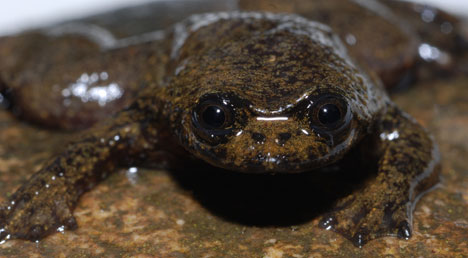
Tuesday, April 13, 2010
DNA sequencing revolution
Craig Venter gives his opinion on the ongoing DNA sequencing revolution in this Nature article. And it is a revolution. The sequencing capacity in the terms of kilobases per machine per day has increased more than 50 000 times since the days of the HUGO project that produced the first draft of the human genome. A complete human genome cost just a few thousand dollars today and can be sequenced in a few hours. There are more than 3800 organisms completely sequenced (mostly viruses) and the big companies are outbidding each other to make the sequencing platform of tomorrow. To produce sequencing data is now a much faster and cheaper procedure than to analyse it even rudimentary, and even storage of the DNA sequence information is becoming an increasing problem.
There are two main conclusions to be drawn. One – which Venter isn’t late to point out – is that the pioneers and visionaries of the sequencing communities are doing a mighty fine job. The other is that close to all fields of biology and medicine are changing forever. There will simply be no avoiding the genomic perspective from now on. Examples that will be commonplace in ten years or so include
- Complete genomes of all clinically isolated pathogen strains and tumours.
- DNA identification of all ecological samples. Everything from microflora to plants and animals. Identification based on morphological characters will be accompanied by DNA phylogeny.
- Mutation background of the lab organisms for every experiment.
- Transcription maps of next to everything.
- Real-time population genetic data on single basepair scale.
- Rare biosphere sequencing
And that’s just the examples that are in the top of my head.
Saturday, March 27, 2010
More dinosaur colour news
Using the same technique of identifying melanosomes with microscopy as in the Sinosauropteryx story, researchers from China and USA have identified the colour patterns of the tiny, feathered dinosaur Anchiornis huxleyi. The body was gray, the limbs and tail had white patches and the head had reddish features - making it rather similar to some modern birds. Again, the distinct colourations suggest a function for the first feathers in signalling.
Image by Matt Martyniuk, made available at Wikimedia Commons.
Thursday, January 28, 2010
Dinosaur colour pattern discovered
In a neat study lead by researchers from UK and China, melanin pigments from feathers of the Cretaceous period living dinosaur Sinosauropteryx are analysed with a scanning electron microscopy. Pigments in feathers are stored in organelles, and as luck has it these have different shapes depending on their colour. So even if the original colour of the pigment is since long gone in the studied fossils the original colour can still be estimated by comparing with the pigments of modern birds. The Sinosauropteryx seems to be red and white with a striped tail.

Copyright: Jim Robbins, Nature publishing group
As if it isn’t cool enough that 60 million years old animals can now be colour coded, the study also put two other questions to rest. The first is the controversy whether Sinosauropteryx really has feathers or if the structures found is something else, and with the discovery of neatly structured melanin pigments in close similarity to patterns found in both modern and early birds it gets a lot harder to figure out what this something else might be. The second is the question what the Sinosauropteryx used the feathers for – they were much too small for flight. The discovery of coloured pattern strongly suggest they were for display, and every biologist worth her salt can pull a handful of different evolutionary explanations for display from her hat at any given moment, starting with mating attraction, mating fighting and predator warnings.
Alina's comment:

Copyright: Alina Pete
Nature's news feature
The original article
Scientific American's news feature
Cuyahoga - River on Fire
Apparently Cuyahoga River, which feeds into Lake Erie, has caught on fire at least 13 times. That's right. That's a river burning. River, as in water. Not that it mattered much when it was covered in oil and even less pleasant stuff.
The big fire, in 1969, was big enough to badly hurt two railway bridges and served as a wake up call to the extent of pollution.


Sunday, November 29, 2009
The Ants
"The neglect of ants in science and natural history is a shortcoming that should be remedied, for they represent the culmination of insect evolution, in the same sense that human behings represent the surimit of vertebrate evolution." (Hölldobler and Wilson 1990, "The Ants")
"A "supercolony" of the ant Formicia Yessensis on the Ishikari Coast of Hokkaido was reported to be composed of 306 million workers and 1,080,000 queens living in 45,000 interconnected nests across a territory of 2.7 square kilometers." (Hölldobler and Wilson 1990, "The Ants", p.1)
"A notorius colony [of Pharaoh's ants (Monomorium pharaonis)] occupied the entire Biological Laboratories of Havard University during the 1960s and 1970s. An extermination campaign was finally undertaken when workers were discovered carrying radioactive chemicals from culture dishes into the surrouding walls. (The incident was made the basis of the melodramatic scientific novel Sprials by William Patrick, Houghton Mifflin, Boston, 1983)." (Hölldobler and Wilson 1990, "The Ants", p.2)
"What makes ants unusual even in the select company of eusocial insects is the fact that they are the only eusocial predators occupying the soil and ground litter. Termites live in the same place and also have wingles workers, but they feed almost exclusievely on dead vegetation." (Hölldobler and Wilson 1990, "The Ants", p.29)
"At this point many more workers pour out of the nest, running excitedly around it and attacking any moving object encountered (including the careless myrmecologist)." (Hölldobler and Wilson 1990, "The Ants", p.149)
"Aging workers of the green tree ant of Australia (Oecophylla smaragdina), who are distinguished by reduced fat bodes and ovaries, emigrate to special "barack nests" located at the territorial boundry of the colony. When Oecophylla workers from neighbouring nests or other invaders cross the line, these guards are the first to rush to the attack. (It can be said that a principle difference between human beings and ants is that whereas we send our young men to war, they send their old ladies)" (Hölldobler and Wilson 1990, "The Ants", p.174)
"Among the more arresting spectacles in the ant world are the dense retinues of certain species that guard the mother queen as she moves from one nest site to another." (Hölldobler and Wilson 1990, "The Ants", p.194)
http://www.antweb.org/index.jsp
Wednesday, September 9, 2009
John Williams is the man
Speaking of John Williams' score - this is a really cool (playback) video of Moosebutter's tribute
"'Oooh, ahhh.' That's how it always starts. Then later there's the running and the screaming"
Re-watching the three Jurassic Park films, and re-reading the first book, I have three main conclusions
- These films are bloody brilliant! Especially the score.
- Labwork is much more fun when you pretend to clone dinosaurs.
- Meat is actually rather rich on lysine... (Thanks Maja)
Tuesday, August 18, 2009
Whoever passes the Turing test is a liar
An Asimoivan robot wouldn't pass the Turing test. In order to pass the test, and thus be deemed a true sentient being, the robot would have to lie about its nature. This is forbidden by the second law of robotics.
Unless, of course, the tester was not a human but a fellow robot, with all possible interesting definitions of "sentient" and "human" that might show up in that conversation.
Sunday, August 16, 2009
Med tåg till valarna

Morgonrufs på Vännäs station

Garanterat järvsäkert

Jag, mormor och gamla minnen

Narvik i kvällssolen

Fikapaus

Valsafari i Andenäs

Västerålens nordspets

Kaskelotten Glen (känns igen på sin vita ryggfläck)

Glen posar inför safaribåten

Fiskebåt med följeslagare

Dykande kaskelott. Fenans vikt mäts i ton

There she blows!

Låt oss säga att ur intet kom en mås...

Dykande val med Vesterålens klippor i bakgrunden

Valskådning. Notera sprutmolnet

Stämningsbild - båt i motljus

Berg, hav och moln

Mer berg, hav och moln

Skarvar på tork

Rorbur i Andenäs

Bo för mås och människor

Morgonstretching

Rariteten på valmuséet - det strandade kaskelottskelettet

Örn flyger framför klippa

Skarv och Lunnefågel

Lunnestim. Notera regnet

Lunne i flykt

Bad i Bleik. Fågelfjäll i bakgrunden

Det var kallt

Tångbädd i vackra färger

Vyer vid havet

Berg och moln

Moln och berg, och även snö

Snö, berg samt dessutom moln

Svolvær fritidshamn
Saturday, August 8, 2009


Tuesday, August 4, 2009
And a million miles away a butterfly flapped its wings ...
There is always a bigger fish, but sometimes the small are the ones that count. In the field of oceanography a recent Nature paper suggests that biologically generated turbulence - swimming and other movements - from the multitude of organisms actually contribute significantly to the mixing of water in the ocean. This mixing does not necessarily come from the animals actively pushing water around, but rather from the viscosity of water itself, which makes a portion of water stick to the animal and follow its movement between the strata of the ocean.
Warm and cold water from different layers mix, energy is transferred, gas are moved between water bodies of different solubility - and in the end the water movements, weather and climate of the whole biosphere is affected. "Even the smallest creatures in the acids of the marsh", as the troubadour sings.
The capacity of the jellyfish Mastigias for moving water is demonstrated in this neat video, with the help of some ink.
Copyright: Katija & Dabiri
Monday, August 3, 2009
The police, the professor and the president
 Copyright: xkcd
I haven't done much of political commentary on this blog yet, so I suppose this is as good a start as any. The commentary in question of course belongs to the author of the webcomic xkcd rather than me, but even so it shows what I in the depth of my heart feel should be the next chapter in the story of the police, the professor and the president.
Update 090817: Press secretary Robert Gibbs has revealed the three involved gentlemen's choice of beer. Apparently President Obama had a Bud Light, Professor Gates had a Red Stripe and Sergeant Crowley a Blue Moon. If I had to choose I would go with the professor on this one. Blue moon is not as dark as I like them, but there is plenty of taste.